The long version
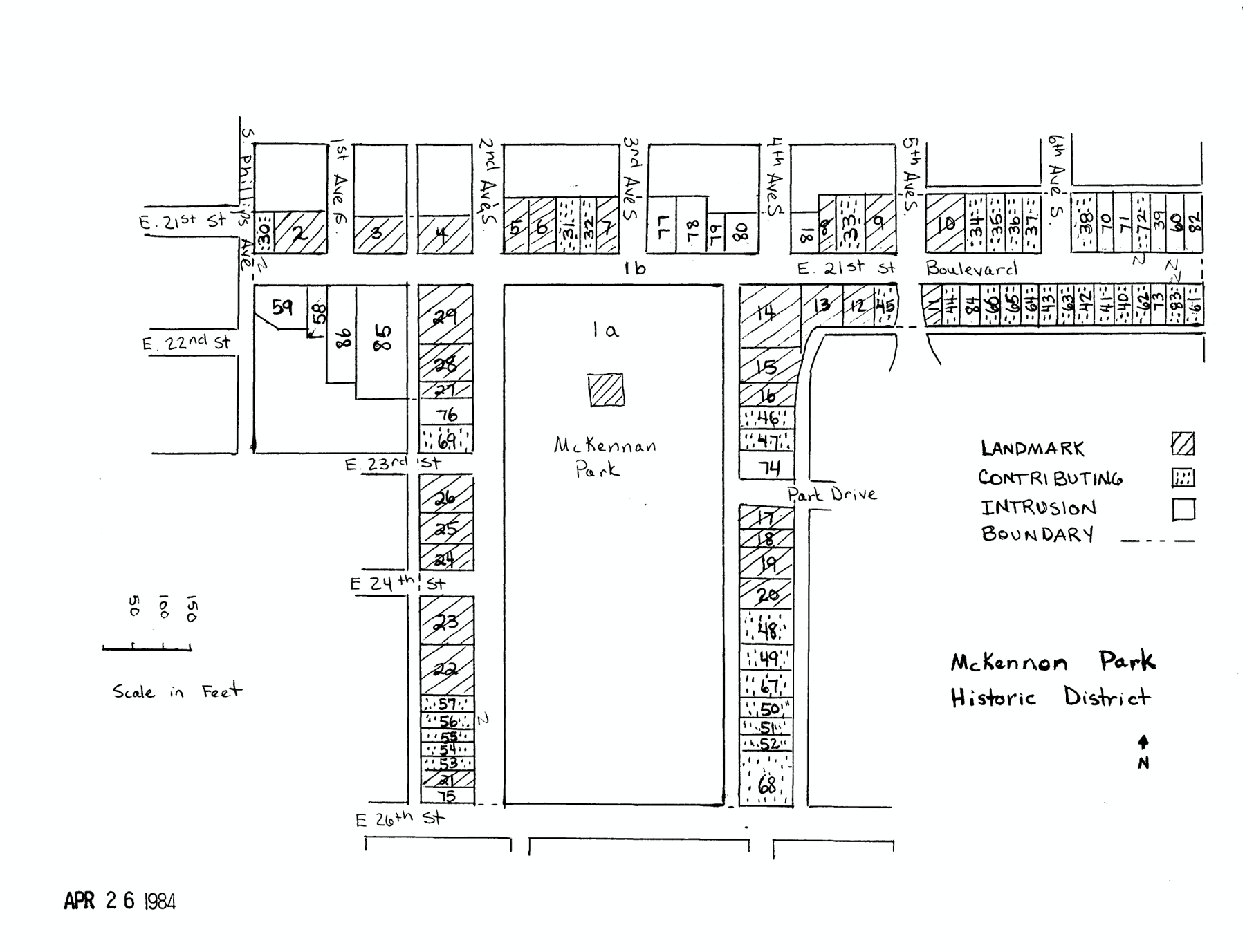
The gift, 1906
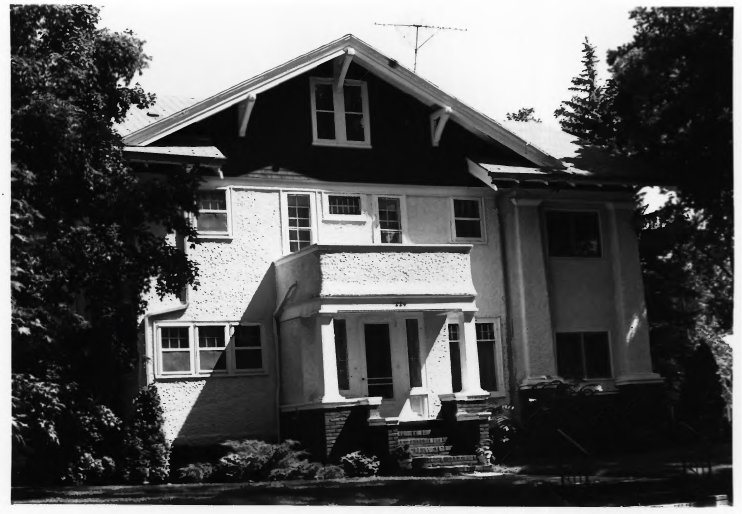
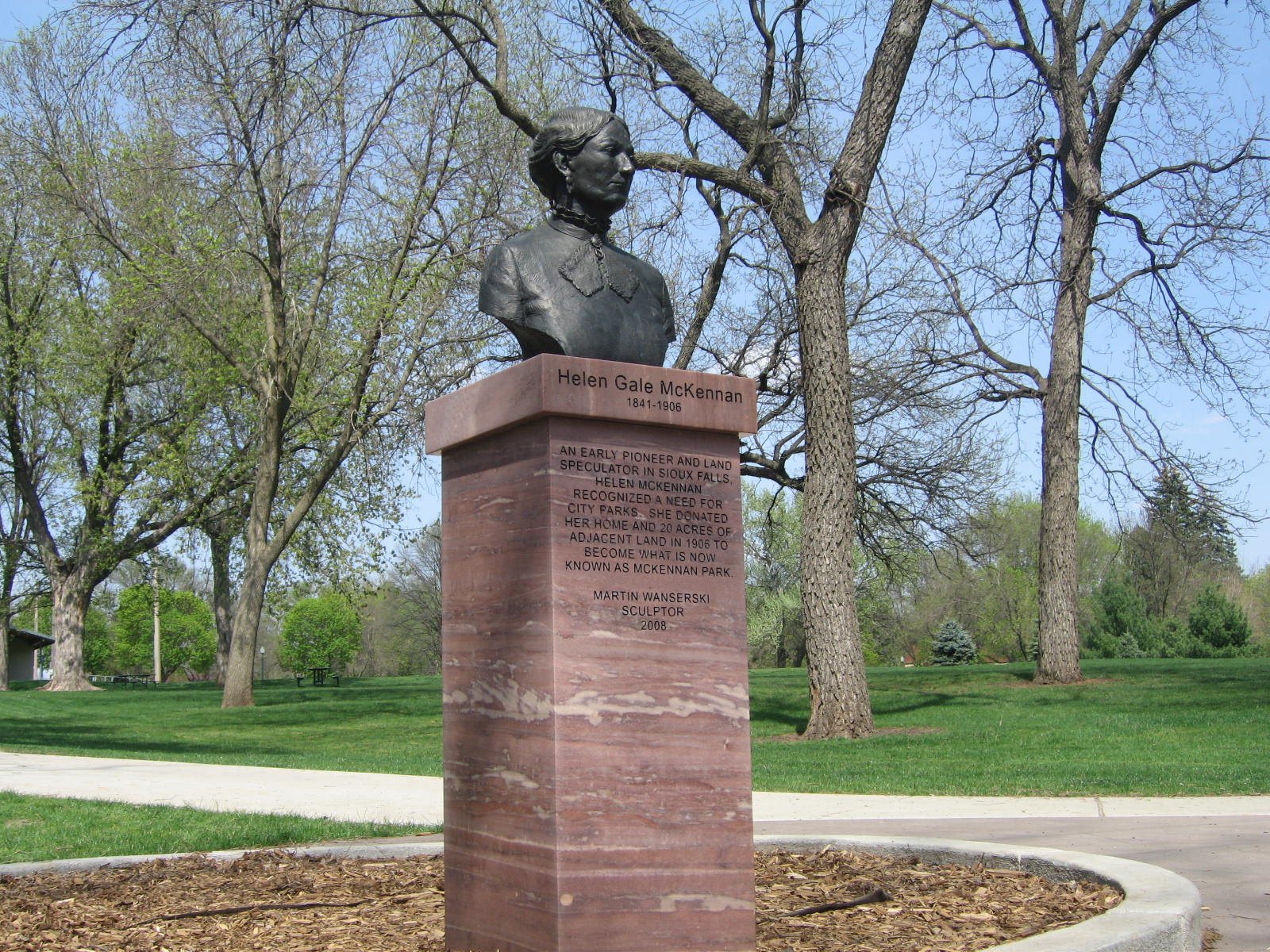
Helen Gale McKennan was born in Albion, New York, on September 6, 1841. She visited Sioux Falls in 1874, went home to marry a physician named William McKennan, and after his death came back for good in the early 1890s at the urging of her brother Artemus Gale, who had been platting additions to the town since 1871. She bought and managed land at a time when almost no woman in town did, held a half interest in the Boulevard Addition, and let the Minnehaha Country Club lay a nine-hole course on forty acres of her ground. By 1898 she lived in the Italianate house Colonel Melvin Grigsby had built at 323 East Boulevard, now 21st Street.
She fell ill on June 1, 1906, and in that illness worked out with her friend E. A. Sherman what would become of her land. She died at home of cirrhosis of the liver on September 29. Two deeds were recorded the same day. The Minnehaha County deed gave the city "the beautiful McKennan home, together with five acres of land outright, and a half interest in twenty acres more," valued at $25,000, on condition that it be used as a public park. A second gave 160 acres in Lincoln County to First Congregational Church. Her will added $25,000 toward a hospital.
Mayor Frank W. Pillsbury proposed selling ten acres with the house. Sherman, as executor, argued she never meant the park land to be sold, and the council gave way. The house and enough ground to sell it went to U. S. G. Cherry in 1907 for $11,000, the proceeds reserved for the park. The deeds then became the first test of South Dakota's new inheritance tax. County Judge D. R. Bailey heard it in October 1907; the Supreme Court voided the law in 1910 and sustained it on rehearing in In re McKennan v. State, 130 N.W. 33, on February 23, 1911. Colonel Grigsby sued over a strip used as a street, Artemus Gale claimed $22,000, a W. G. McKennan $6,000. When they settled in January 1910, $26,000 remained for the hospital, dedicated December 17, 1911, northeast of the park.
Making the park, 1907 to 1920
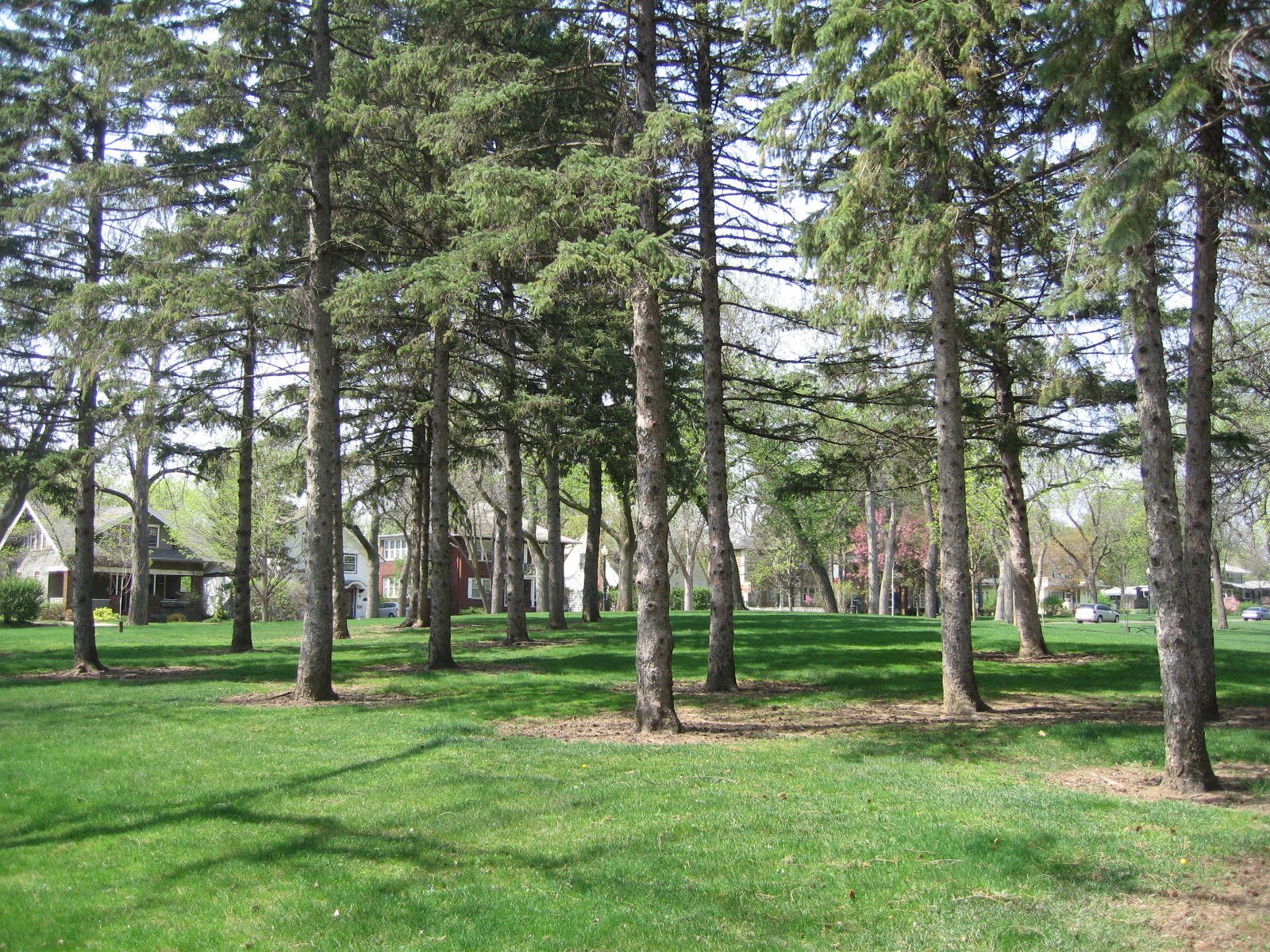
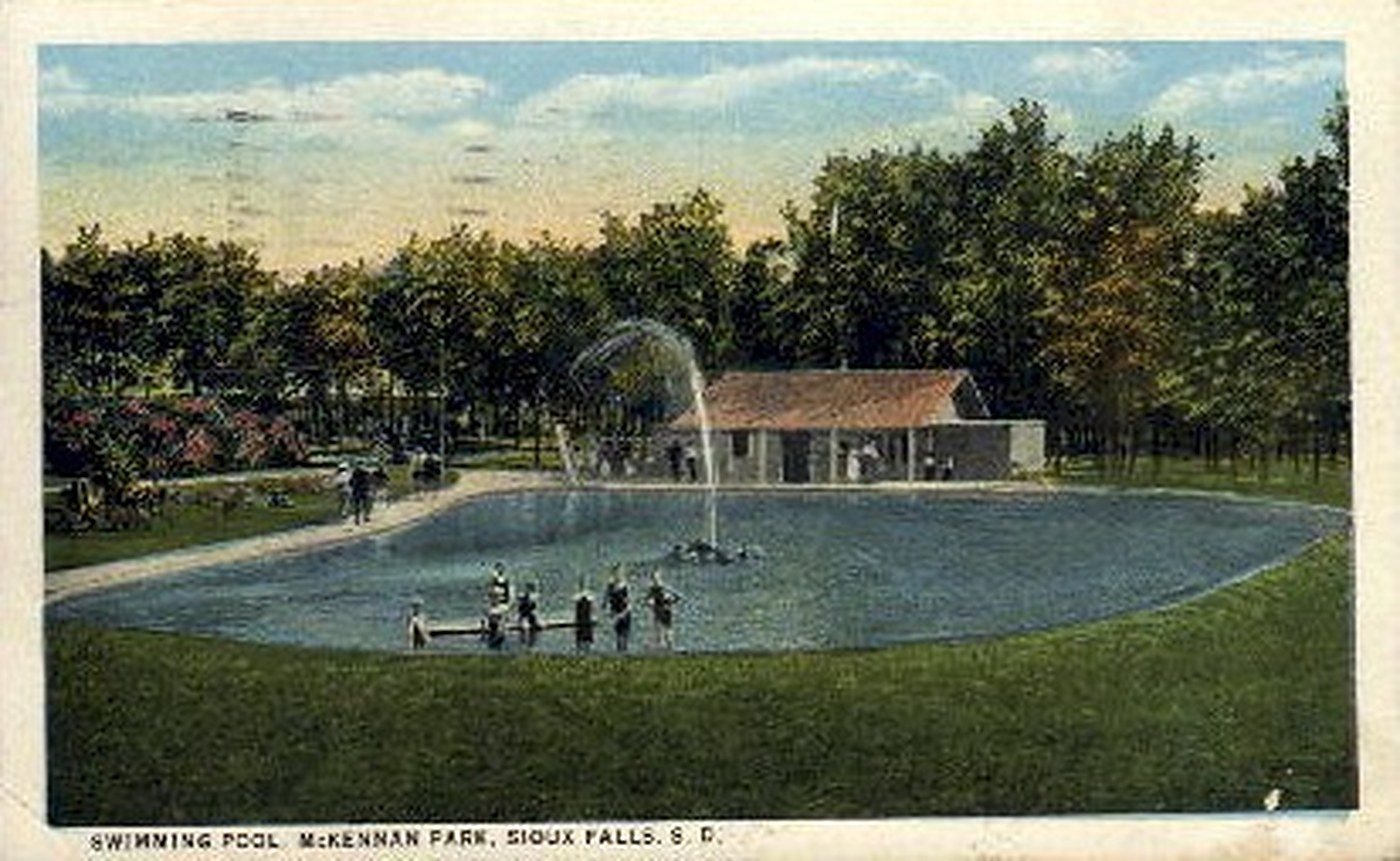
In spring 1908 the grounds were laid out to a landscape gardener's plan. Elms and walnuts went in and Sherman dammed a small lake that children used as a swimming hole. On July 4, 1908, the park was opened to the public with fireworks, hundreds arriving by streetcar. The formal dedication came Sunday, July 26, before nearly two thousand: Mayor Doolittle presiding, Bishop Hare praying, Sherman handing the park to the city, Rev. Frank Fox giving the memorial address, the Queen City Quartet singing. Band concerts began that Wednesday at ten cents a chair.
In June 1909 Maurice Stegner, fourteen, cut his foot on glass in the lake and died of lockjaw. Tennis courts came that year. A menagerie grew: deer from the Black Hills in 1915, elk from the Seattle Elks Lodge in 1916, ostriches, wolves, a monkey, a pelican. It moved to Sherman Park in 1930 and became the Great Plains Zoo. Sherman won the 1915 park-board law, chaired the first board, and saw Frederick Spellerberg hired as superintendent in 1916, the year he died. On July 11, 1920, several thousand heard the first concert of the Municipal Band, approved by voters in the first city election open to women.
The showcase years, 1920 to 1941
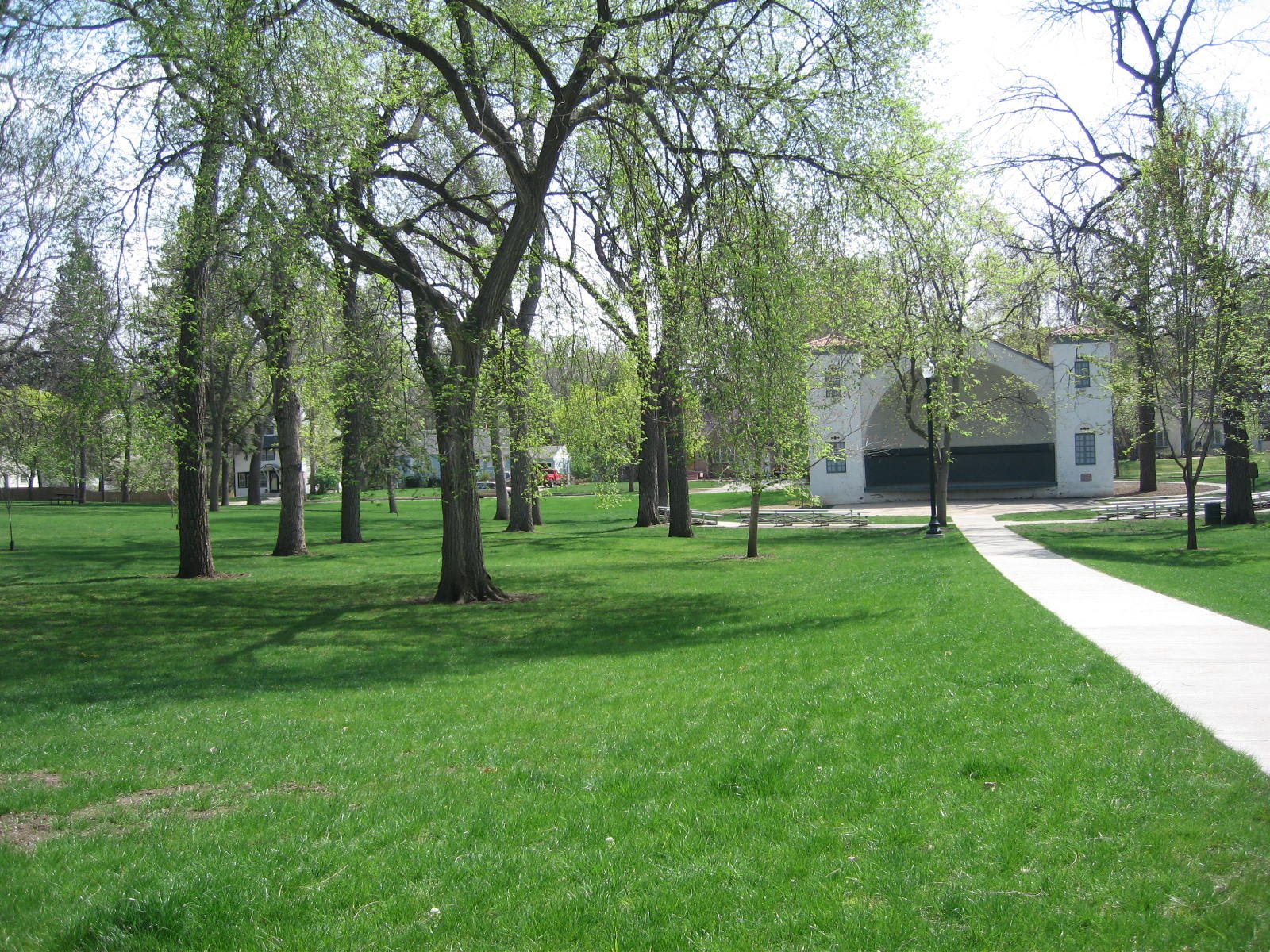
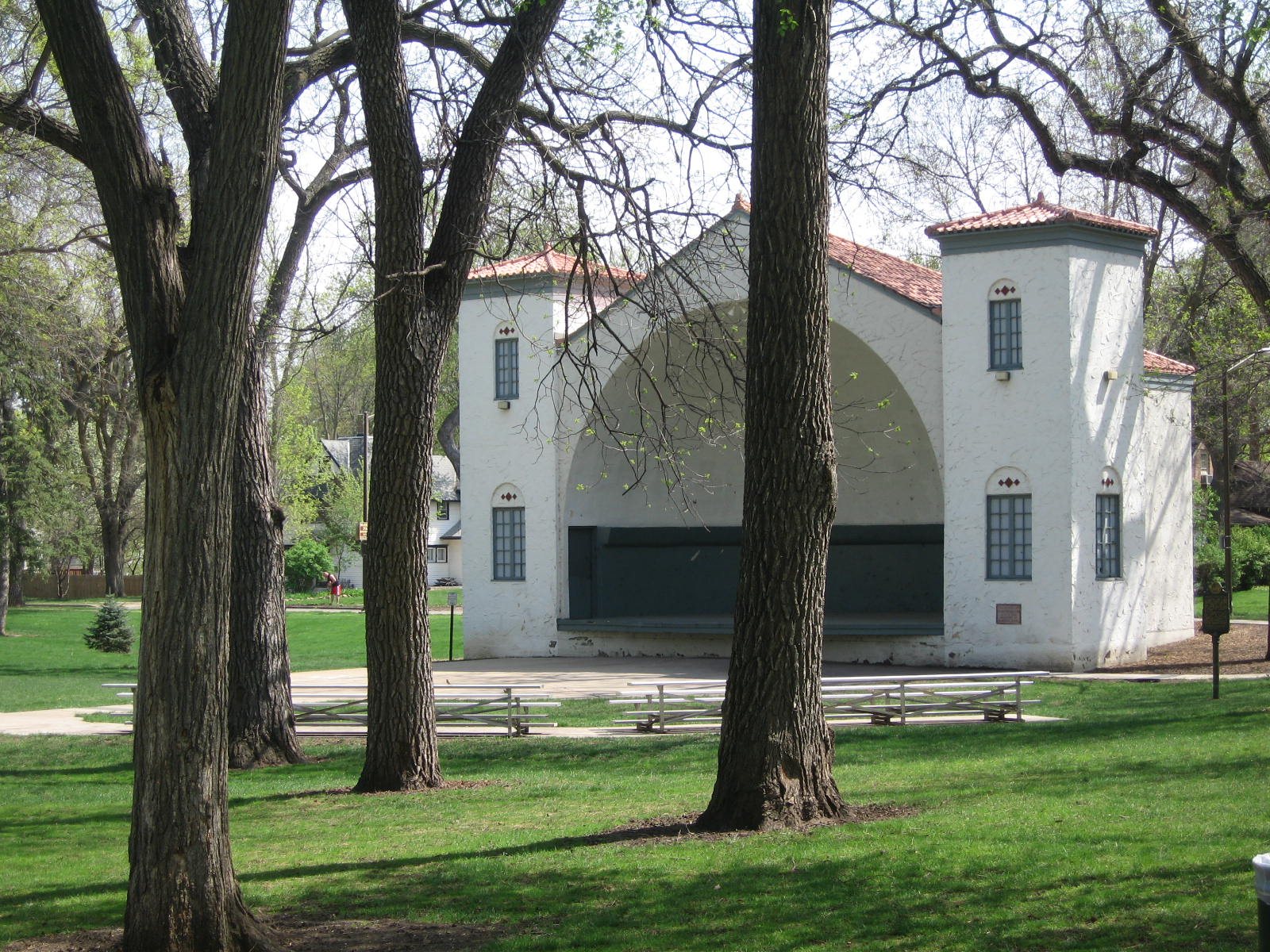
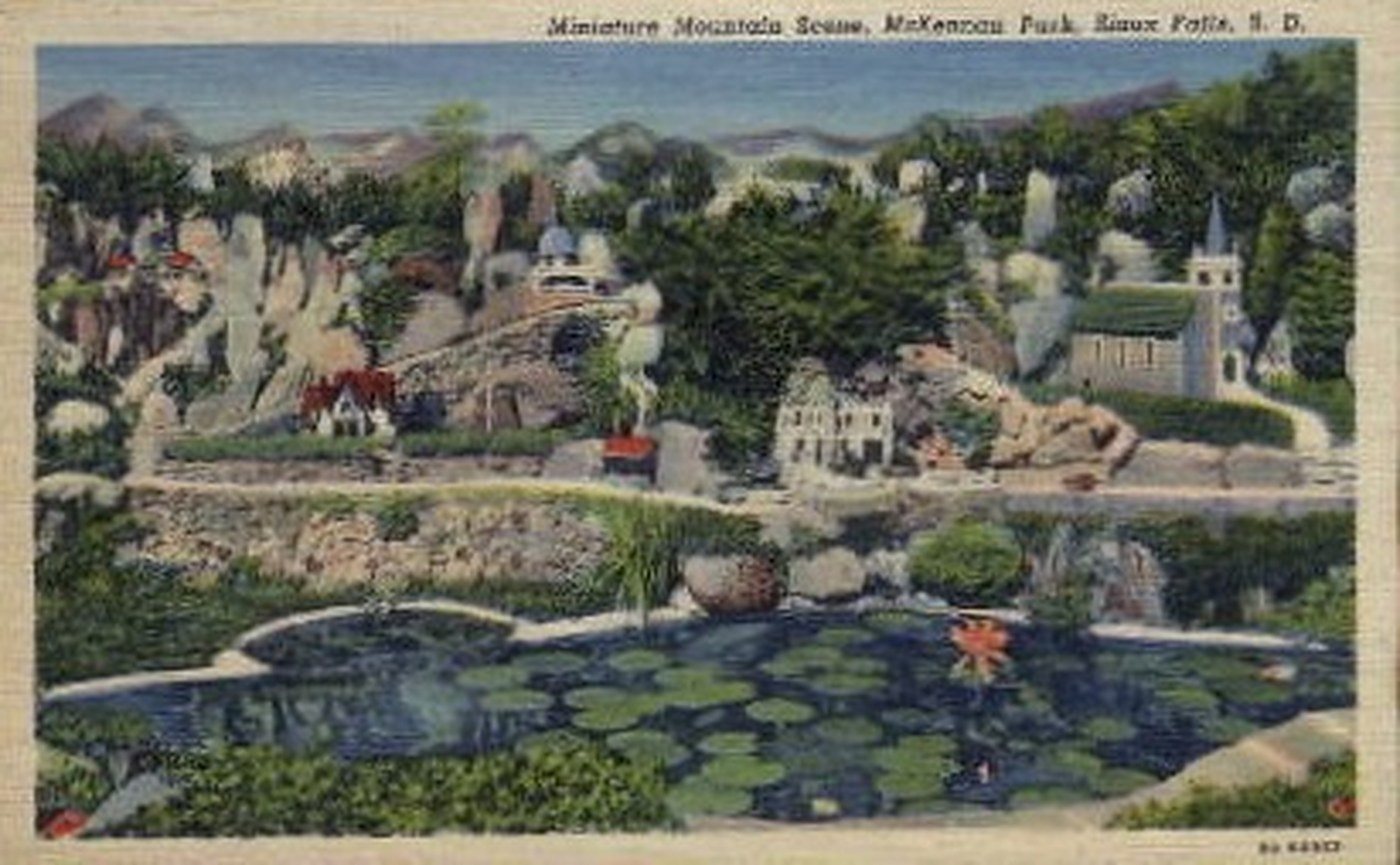
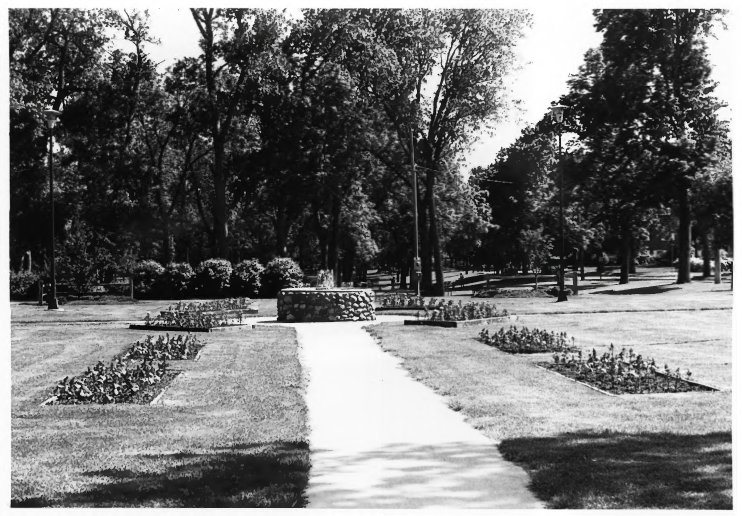
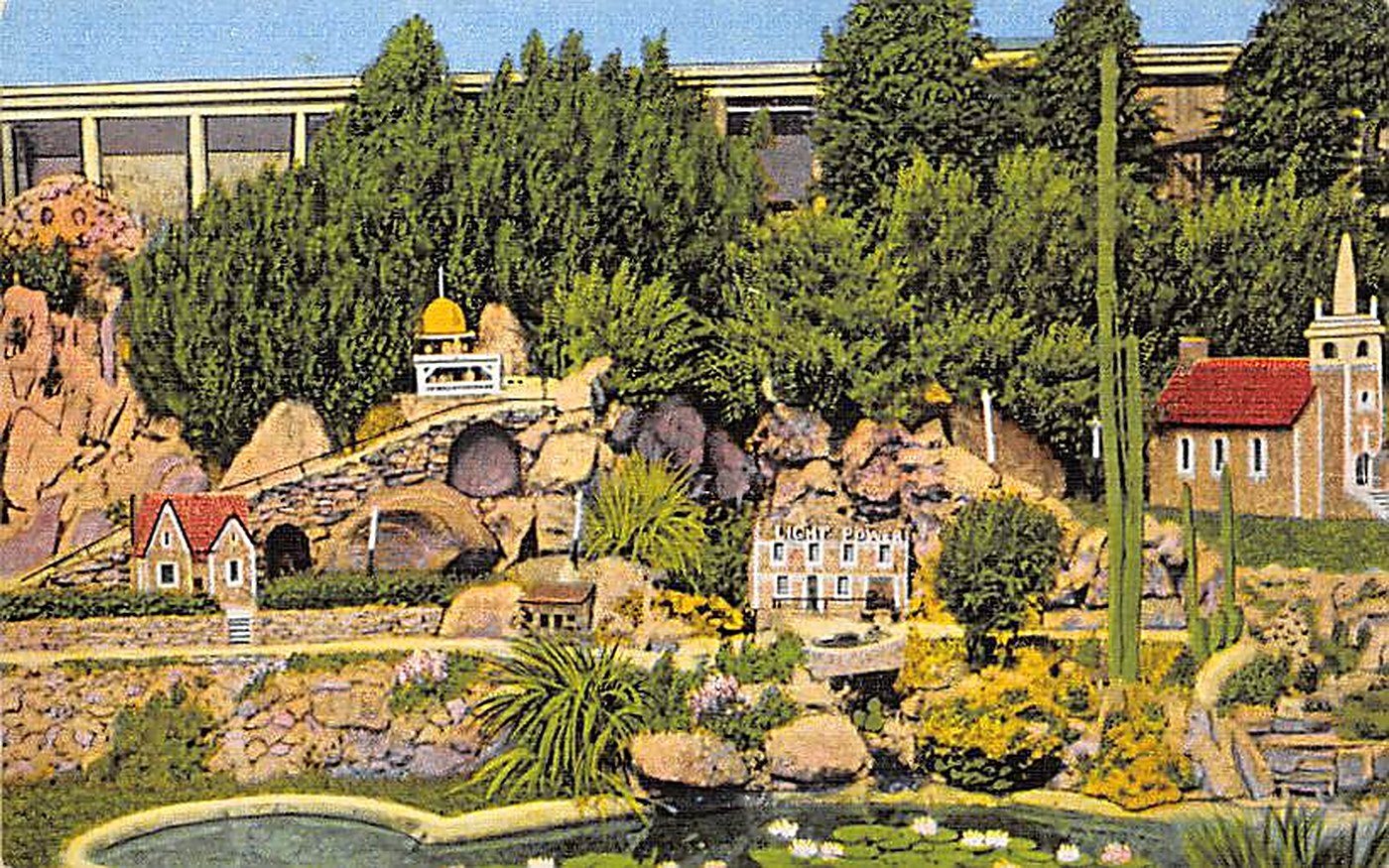
The Municipal Band took the idea of a shell to the Cosmopolitan Club, which built it as a gift to the city and dedicated it July 4, 1926, before ten thousand people. The concrete wading pool with its fountain came in 1929, a hundred roses in 1930, the miniature village in 1931, a cactus garden in 1932. The nomination also records a lily pond complete with a living alligator, a Japanese garden and an Indian village.
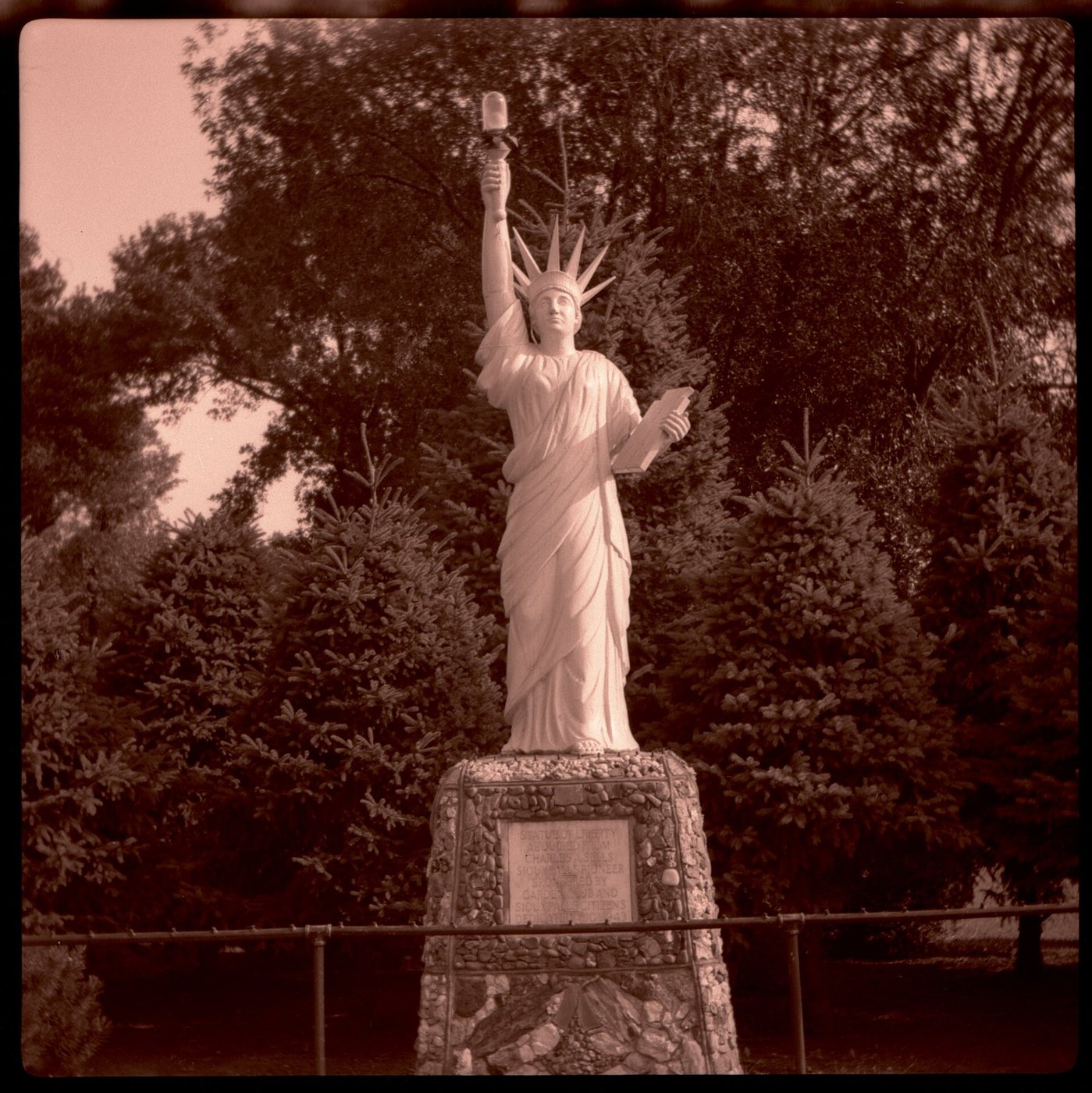
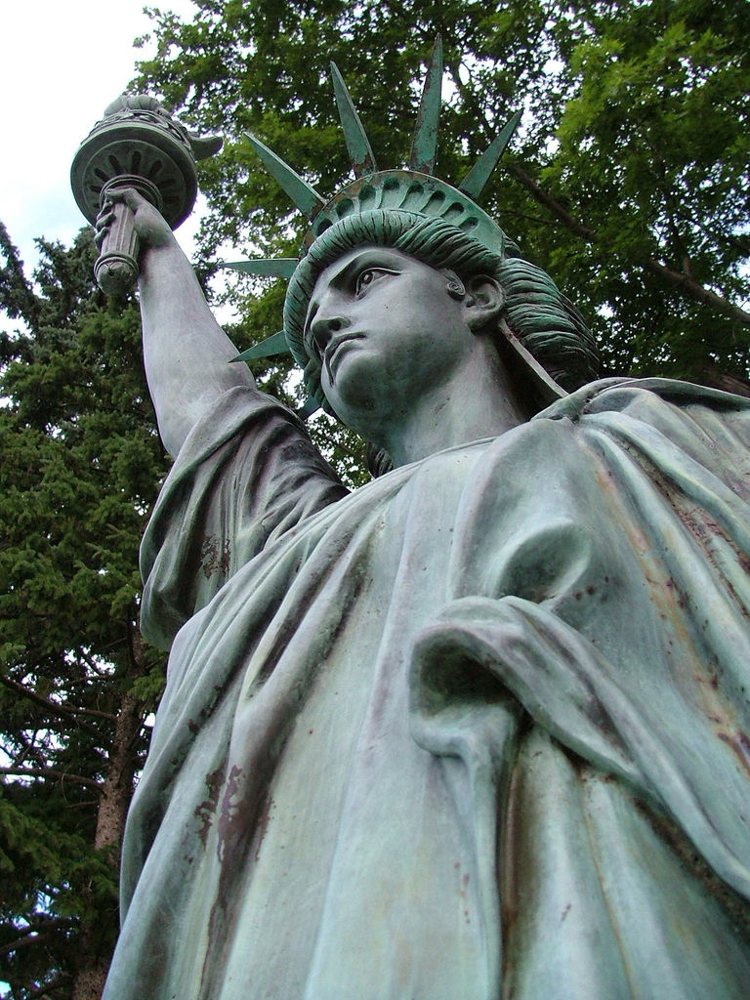
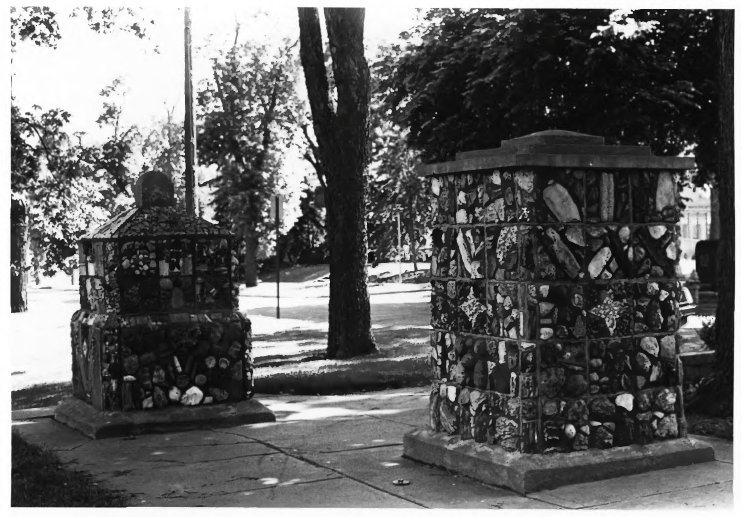
In 1937 two entrance pillars were built of South Dakota stone, fossils and Native artifacts donated by Emil M. Christianson of Hills, Minnesota. In 1940 caretaker Oscar Ellefson, builder of many of the early attractions, proposed two more made of stone from every one of the forty-eight states. The Chamber of Commerce wrote to every state capital, every state answered, and the Pillars of the Nation were finished in August 1941. Two summers later Charles A. Sells's wooden Liberty, which he said Bartholdi had carved as a model, was unveiled on August 1, 1943, by the twins Thelma and Elma Iverson, the Garden Club having raised the money.
Loss and recovery, 1960 to 2026
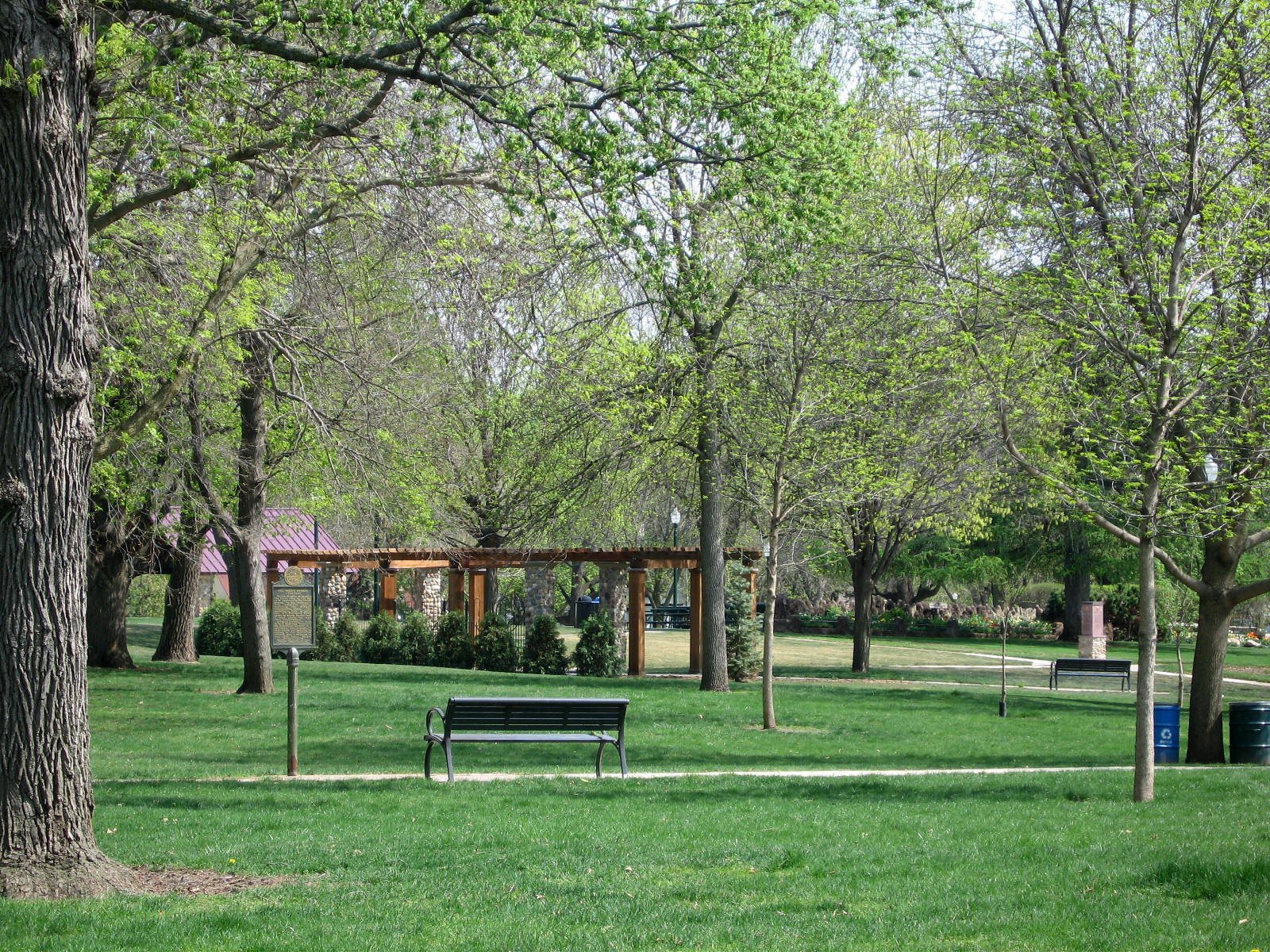
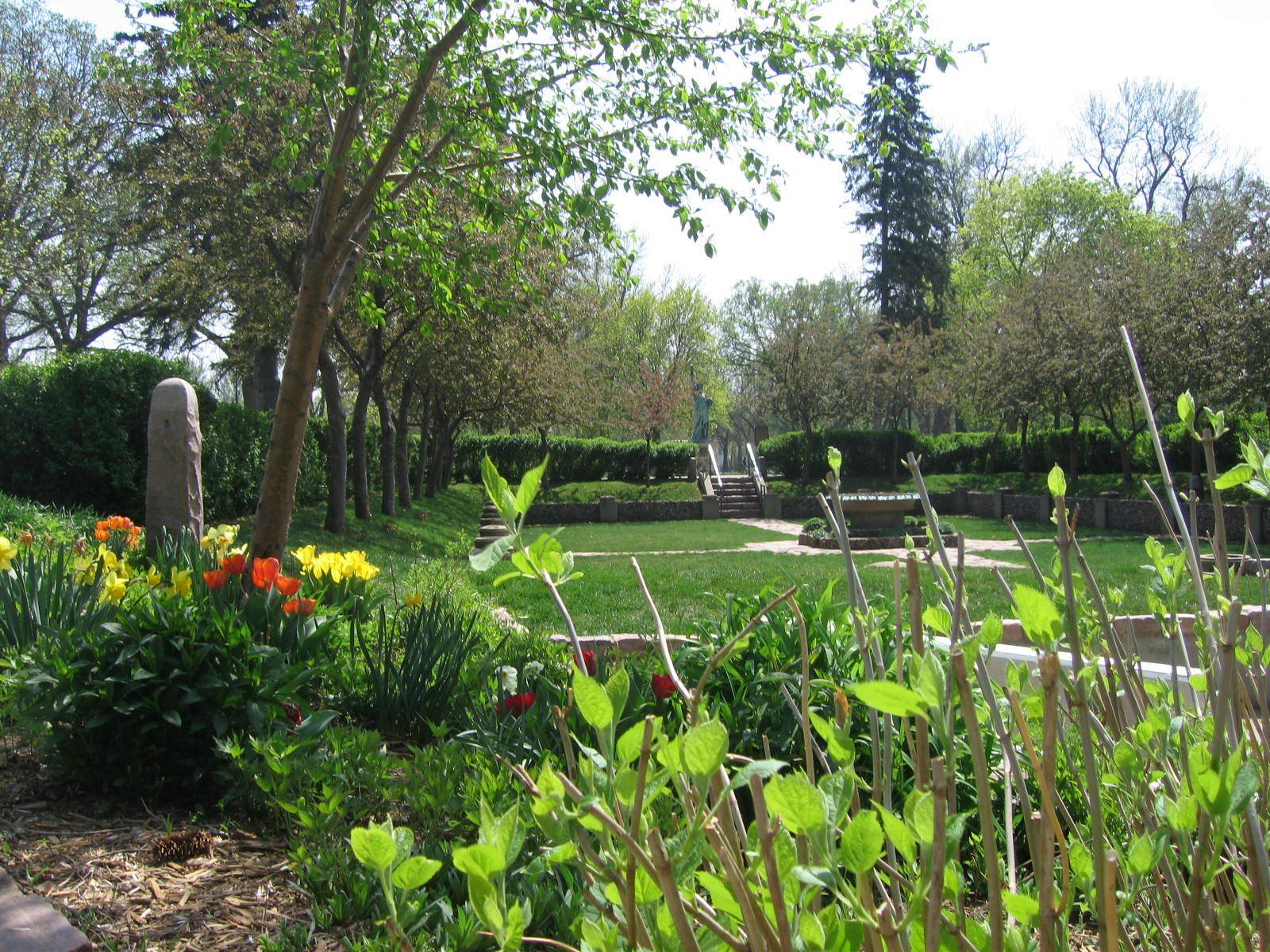
Dutch elm disease took the canopy in the 1960s. Vandals wrecked the village and the greenhouses followed; the wooden Liberty was taken down; the McKennan house, Red Cross headquarters since 1943, was demolished in February 1961 for $790. In 1971 eighteen neighbors won an injunction against a full-size pool, so the city built a new wading pool and gave Frank Olson Park the big one. The district went on the National Register in 1984. The shell was renovated in 1995, the garden in 1996, the Pillars in 1997 and 1999, and a bronze Liberty by Serguei Iourov was dedicated July 22, 2002. The 2008 centennial brought a pergola, new walks, a shelter, the Wanserski bust and Potato Man, in two construction phases planned by Confluence. The Friends association formed in 2014 and commissioned a new master plan in 2020. The shell's exterior was restored for its centennial in 2025, and the new wading pool opened May 29, 2026, free as it has been since 1929.