
From the postcard rack
Seven cards, seven places.
Between the 1930s and the 1950s, publishers printed McKennan Park on linen postcards and sold them in every drugstore in town. Four of the places on them are gone. Each card leads to the page for its place.
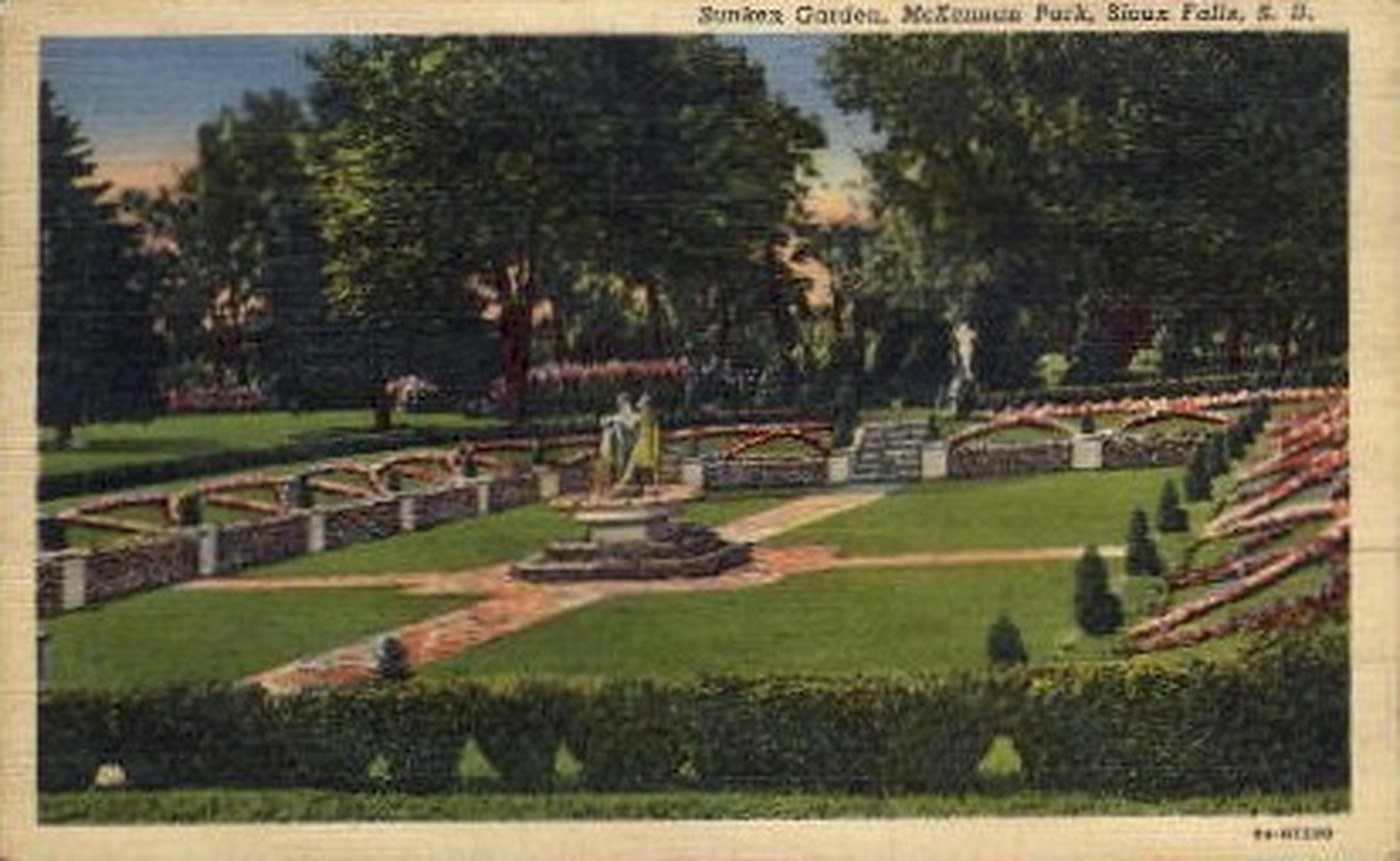
About 1940
The Sunken Garden
The card every visitor bought. Stone walls, a central fountain, beds laid out in a cross, and the band shell's towers just out of frame. The 1984 National Register nomination called it a sunken Roman garden. It was remodeled in 1996 and is where the park's weddings are held.
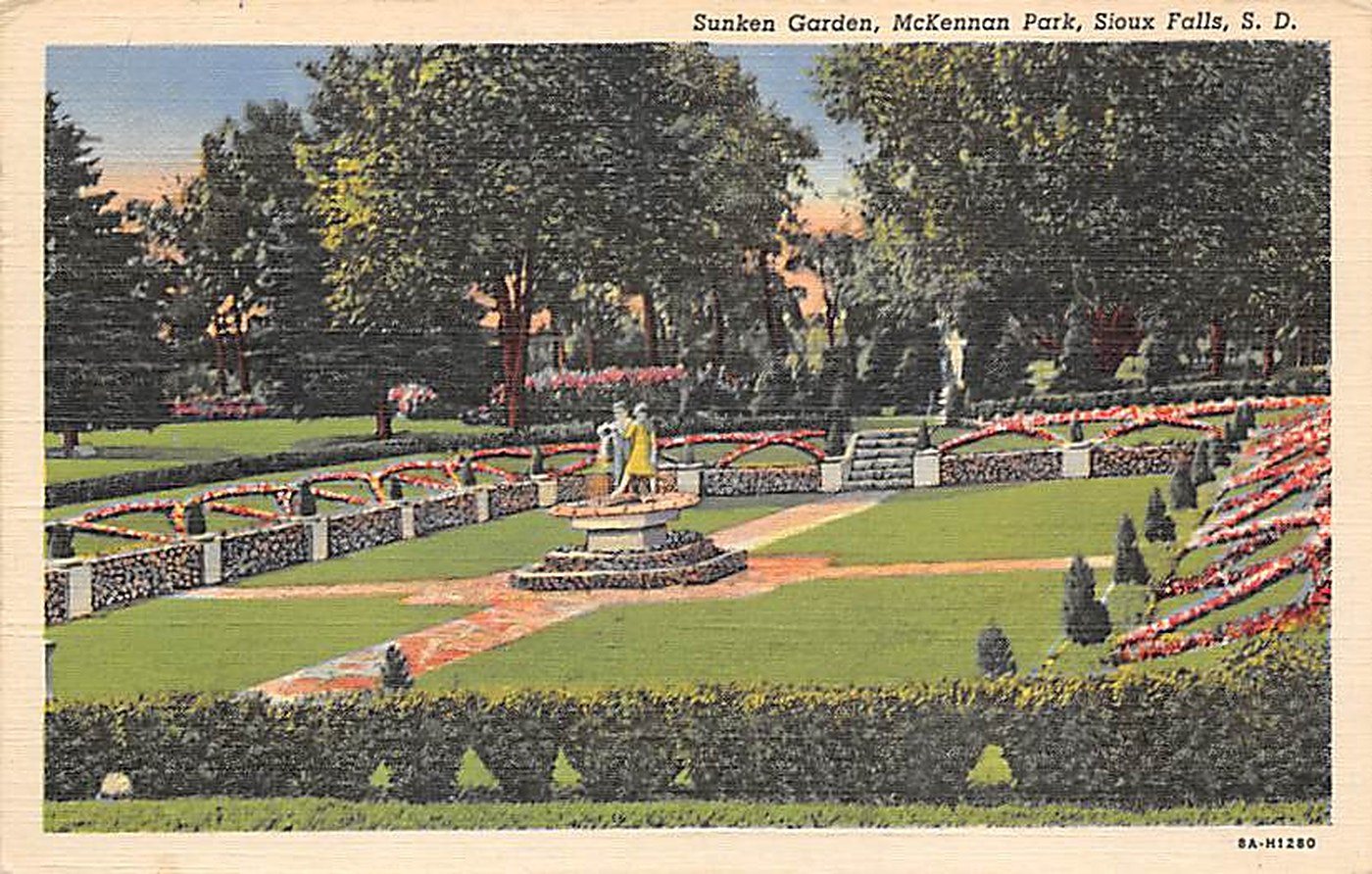
Postmarked 1944
The Sunken Garden, 1944
The same view, printed a few years later and mailed during the war. The statue at the fountain and the clipped hedges are the ones the park staff planted and shaped by hand each spring, a practice the city still keeps.
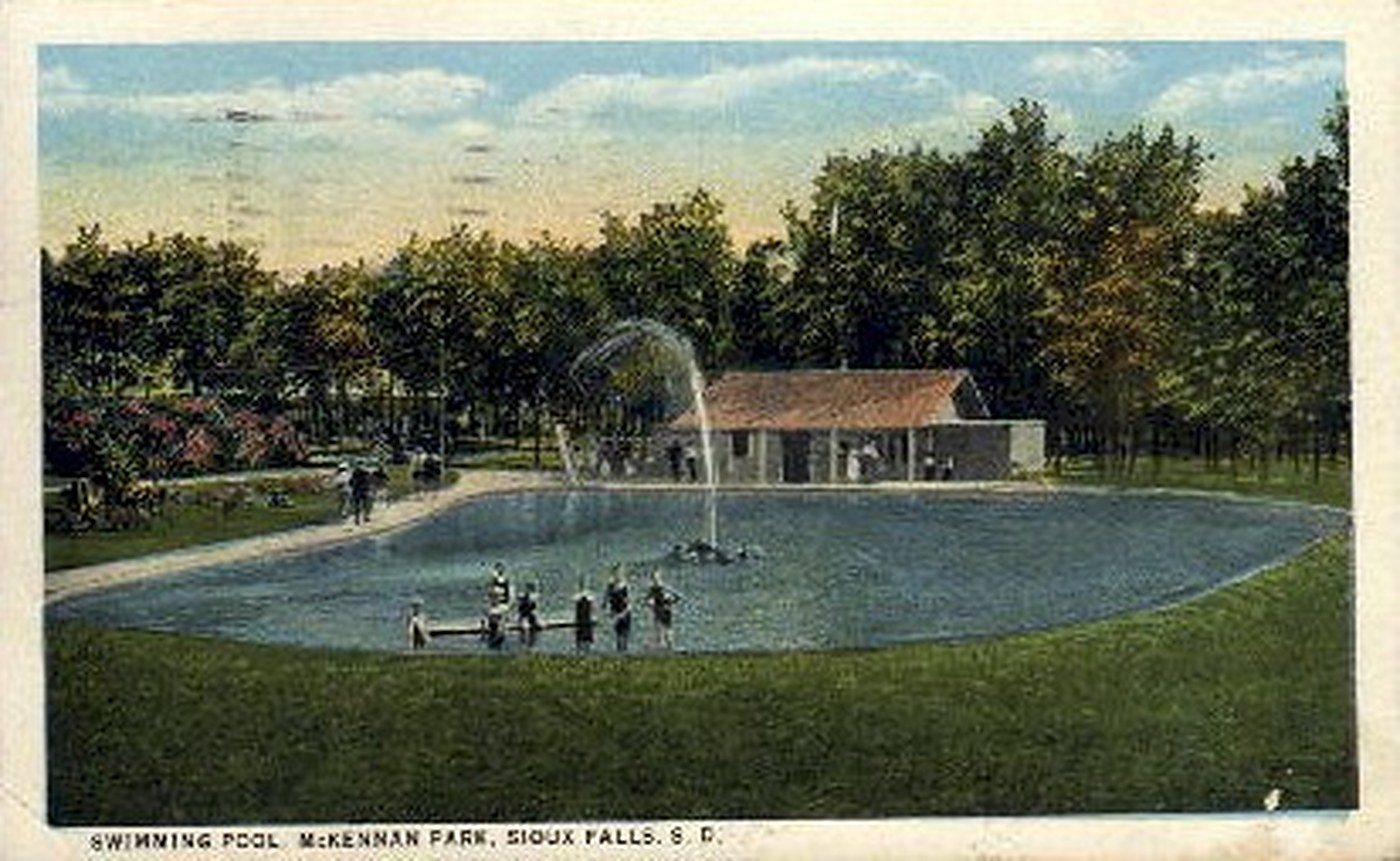
1930s
The Swimming Pool
The 1929 concrete wading pool and its fountain, with the bath house behind. It replaced E. A. Sherman's 1908 lake, the swimming hole where a boy cut his foot in 1909. The pool was rebuilt in 1971 and again in 2026, and has never charged admission.
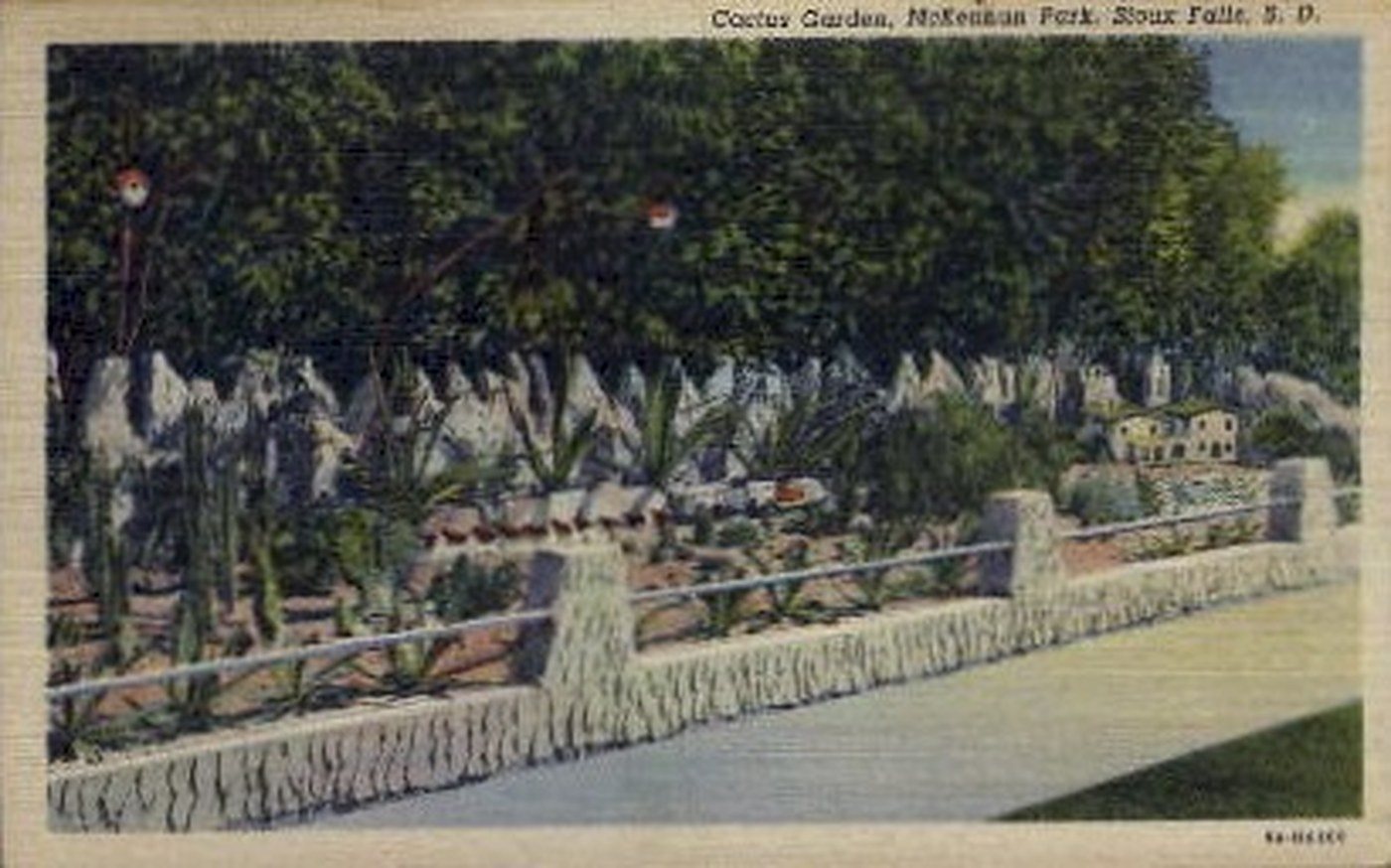
Added 1932
The Cactus Garden
A desert bed on the northern plains, planted in 1932 beside the rock garden and tended by the park's greenhouse crew. It did not survive the 1960s, when vandalism and Dutch elm disease took most of the park's showpieces.
1930s
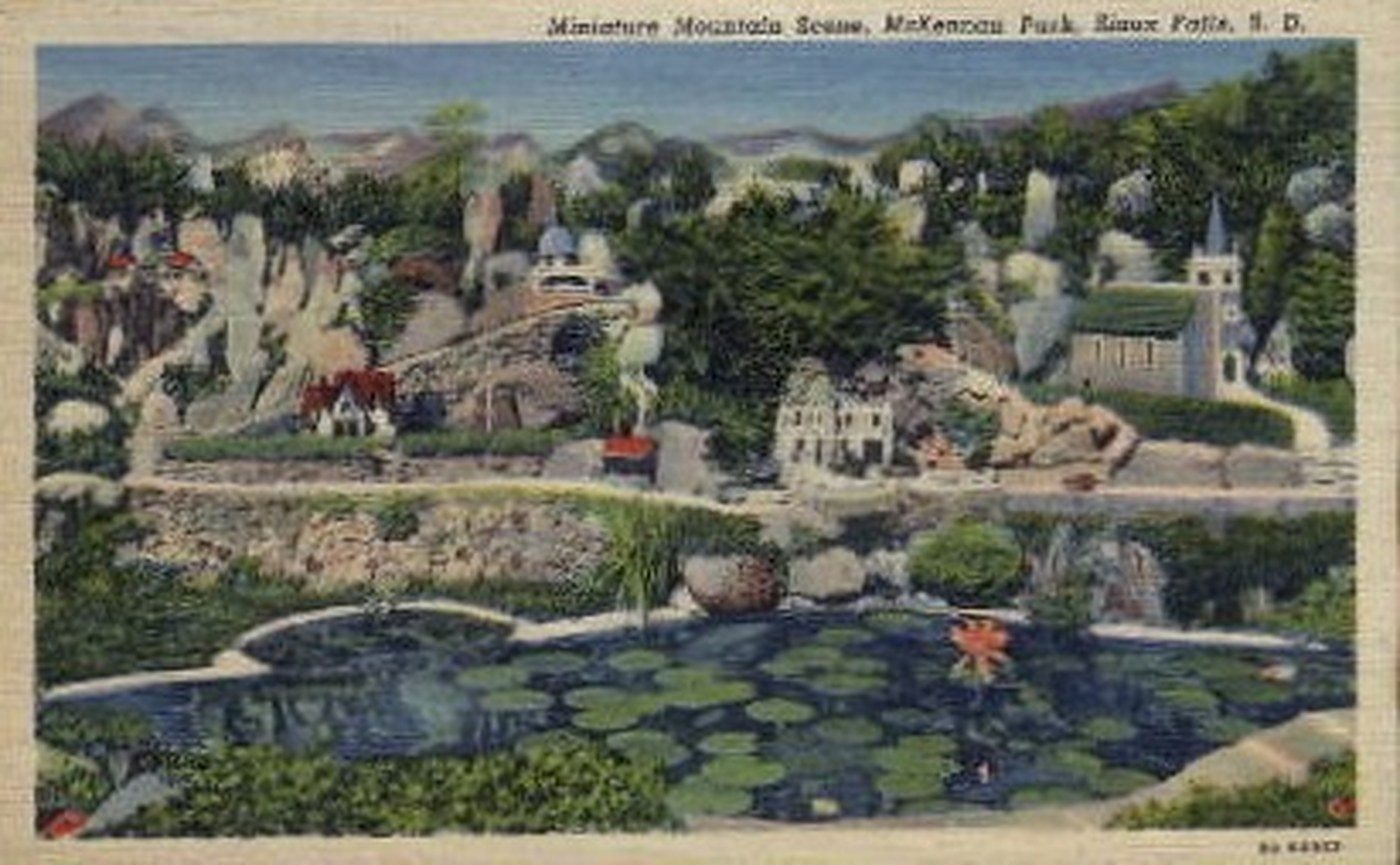
The Miniature Mountain Scene
A rock tableau with its own miniature powerhouse, part of the staff-built landscape northeast of the formal gardens. The nomination lists it with the lily pond that held a live alligator and a Japanese garden, none of which remain.
Built 1931
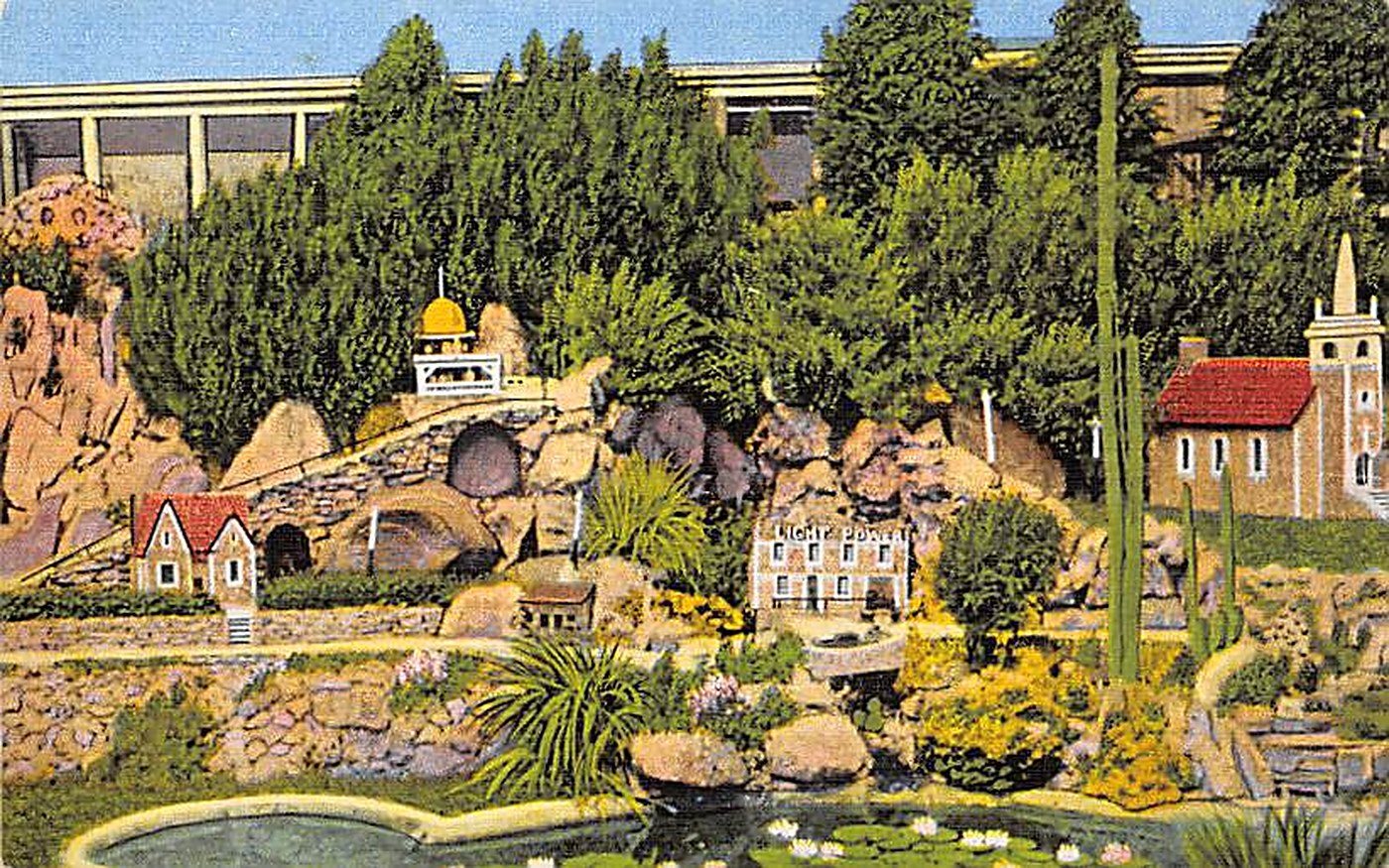
The Miniature Village
Little houses, a church, Light and Power buildings, a model railroad that ran on certain days and a goldfish pond with a tiny fisherman, built by park employees in 1931 and photographed here with the greenhouses behind. Children pulled themselves up on the garden wall to look at it for thirty years.
1930s to 1950s
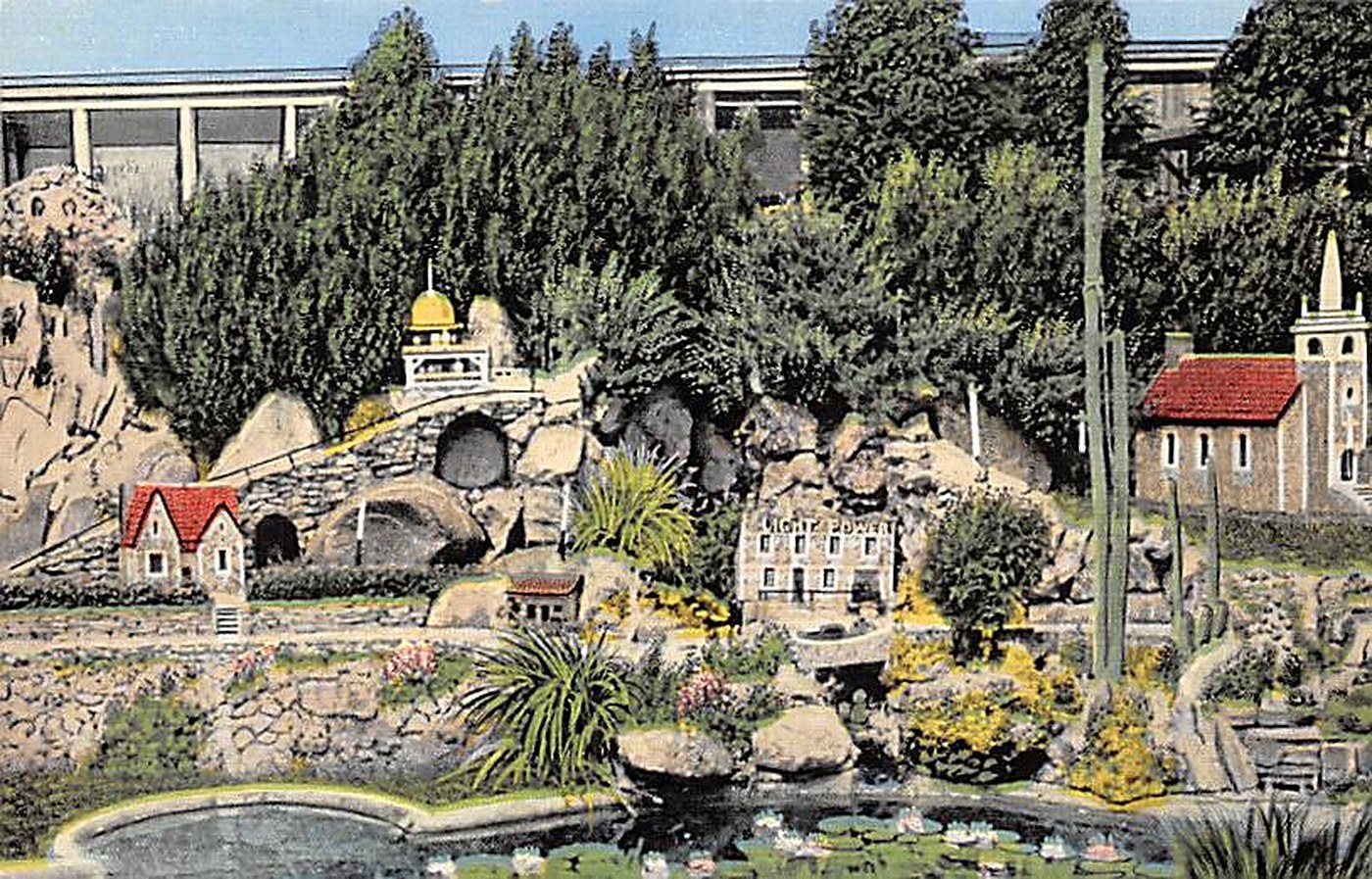
The Miniature Village, second view
Vandals forced its removal in 1961. A marker placed by the Friends of McKennan Park now stands near the site, and the two postcards are the best record of what was lost.